

Technology now reaches African markets quickly. The harder part is making it work here.
AI makes the gap easy to see. A new model may promise faster research, better customer support or easier product development. Its product page will explain the features and benchmarks. It will say far less about whether the model can work with scattered data, existing systems, local regulation, tight budgets or customers who may not trust an automated decision.
Those questions decide whether the technology delivers any value.
African product teams are often left to answer them on their own. Product Pulse Africa studies changes in technology, products and markets, then examines how they apply under African conditions. We turn that work into public knowledge, practical tools and advice for organisations making product and technology decisions.
What this article covers
This article explains:
The research, case studies and resources we publish
The tools we build and test through Pulse AI Labs
The decisions we support through Intelligence and Advisory
How the three areas share evidence and improve one another
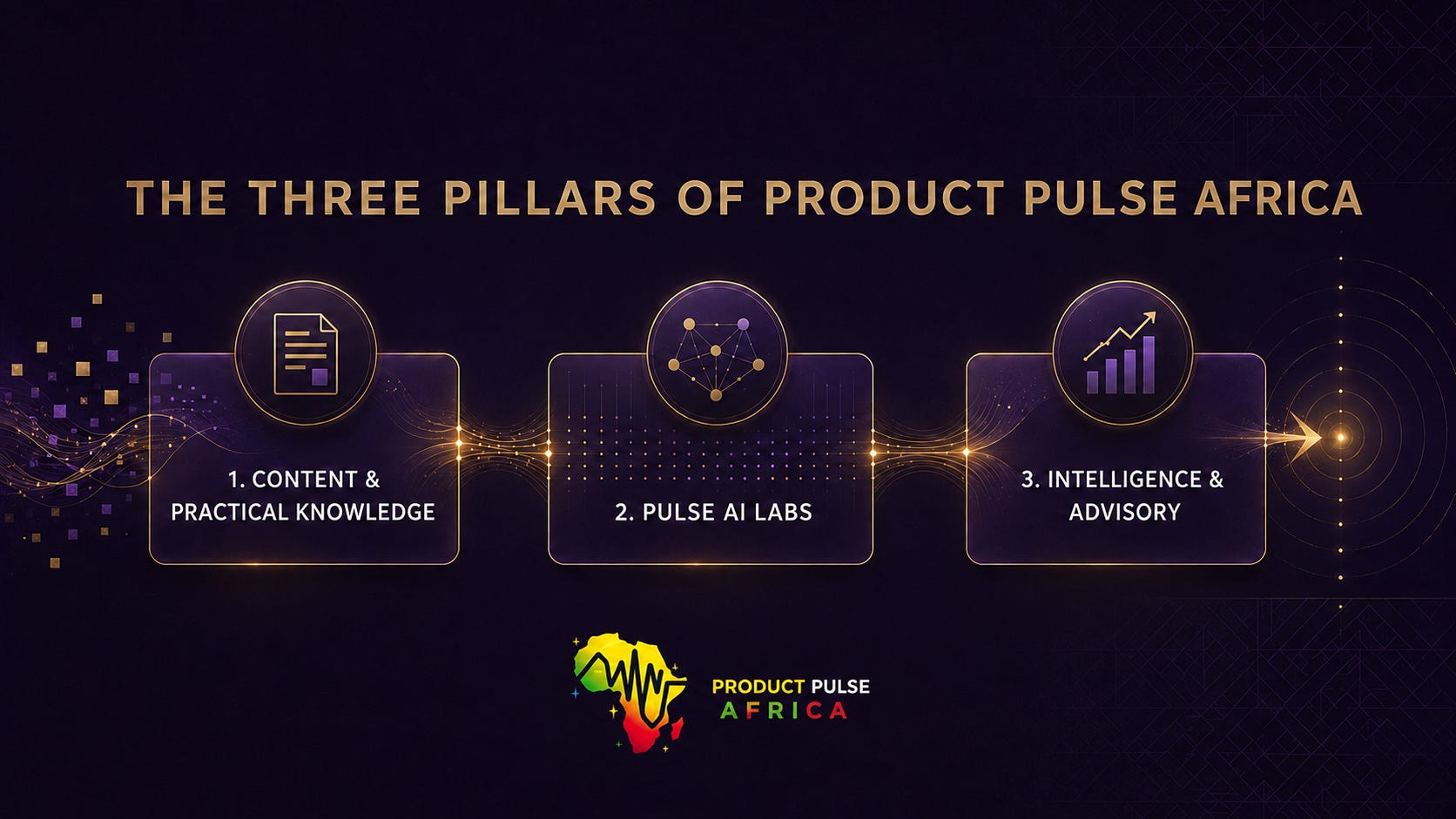
Pillar 1: Content and Practical Knowledge
Content and Practical Knowledge is the public-facing part of Product Pulse Africa. Through our newsletter, we explain what is changing and how African builders can use it in their work.
An article might examine how a product manager can use AI during discovery, what a bank should test before deploying an AI support agent, or whether the claims made about a new tool still hold when useful data is incomplete or difficult to verify.
Our case studies look closely at implementation. We study how African startups, banks and other institutions use technology, which problem they were trying to solve, what choices they made and what happened afterwards. Other builders can then see the constraints, compromises and failures that rarely appear in a launch announcement.
We also publish guides, frameworks and tools that people can apply directly. These include competitor-research methods, templates for testing product assumptions and guidance on using AI during product development. The Pulse Research Assistant, built to support market and product research across scattered sources, is one example.
We are now expanding this work through more original research, more African product case studies and direct conversations with the people doing the work. Every piece should leave the reader with a useful conclusion, a method or a tool.
Pillar 2: Pulse AI Labs
Some of the problems we find through our research need more than an explanation. Pulse AI Labs is where we build and test possible products.
The Pulse Research Assistant is our starting point. Market and product research often means searching across websites, reports, regulatory notices and poorly organised documents. The assistant is intended to reduce that work while keeping the source material visible, so users can check the answer for themselves.
We plan to build around other problems that appear repeatedly in product work: comparing features, prices and customer journeys; finding reliable answers across internal documents; and testing product ideas before a team commits a large budget. A tool will only be worth building when we have evidence that the problem is real and repeated.
Each tool will start with a specific user and a narrow job. We will test early versions with people who already do that work. We will ask whether the tool saves enough time to matter, improves the decision, shows its evidence and fits the user’s existing workflow. If it fails those tests, we will change it or stop building it.
We will publish what we learn, including cases where AI performs poorly or adds work without improving the result. That evidence will feed back into our articles, guides and case studies.
Pillar 3: Intelligence and Advisory
Some decisions cannot be made from public information alone. An organisation may need to use its own customer data, systems, priorities and risk limits to decide why a product is underperforming, whether to enter a market or where AI could improve a workflow.
Intelligence and Advisory is how Product Pulse Africa works with organisations on those questions. The work may include market and competitor research, product and proposition reviews, portfolio analysis, AI adoption or workflow design.
The scope will depend on the decision. The result might be a market recommendation, a revised proposition, a prioritised roadmap, a tested workflow or a decision to stop pursuing an idea. The work has failed if it ends as a presentation that nobody uses.
These engagements also keep us close to the problems organisations are dealing with. Client information will remain confidential. However, repeated problems can still point us towards subjects that need more public research or tools worth testing through Pulse AI Labs.
How the three pillars work together
Consider a product team comparing competitors. Pricing, features and customer journeys may be spread across dozens of sources, with different terms used for the same thing.
Through Content and Practical Knowledge, we can publish a reliable method for making that comparison. Through Intelligence and Advisory, we can apply the method to a live decision, such as whether a financial institution should enter a new product category. If several teams face the same research problem, Pulse AI Labs can build a tool that collects the evidence, organises the comparison and makes the findings easier to check.
Testing the tool may expose weak sources, missing data or better ways to structure the research. We can use those lessons to improve the tool, strengthen the advisory work and publish better guidance. The same evidence improves all three areas.
Our initial focus
We will begin with AI, product development, financial services and African market intelligence. These are areas where we have direct experience and can produce useful work now.
We will cite sources, explain our methods and correct conclusions when stronger evidence appears. We will test tools with the people expected to use them. We will also say when a problem needs better data, clearer ownership or a sound process before it needs AI.
In the coming weeks, we will publish new research and African case studies, release practical guides and show how the Pulse Research Assistant works. We will also speak with builders and organisations whose product, market or technology questions can test this model in practice.